All About Your Thyroid
What is the Thyroid?
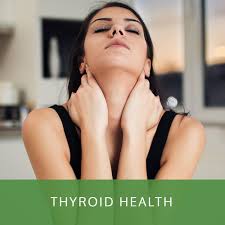
The thyroid is a small gland, shaped like a butterfly, located in the lower part of your neck. The function of a gland is to secrete hormones. The main hormones released by the thyroid are triiodothyronine, abbreviated as T3, and thyroxine, abbreviated as T4. These thyroid hormones deliver energy to cells of the body.
T3 and T4 production and action
Thyroxine is synthesised by the follicular cells from free tyrosine and on the tyrosine residues of the protein called thyroglobulin (TG). Iodine, captured with the “iodine trap” by the hydrogen peroxide generated by the enzyme thyroid peroxidase (TPO)[2] and linked to the 3′ and 5′ sites of the benzene ring of the tyrosine residues on TG, and on free tyrosine. Upon stimulation by TSH (see below), the follicular cells reabsorb TG and proteolytically cleave the iodinated tyrosines from TG, forming T4 and T3 (in T3, one iodine is absent compared to T4), and releasing them into the blood. Deiodinase enzymes convert T4 to T3[3]. Thyroid hormone that is secreted from the gland is about 90% T4 and about 10% T3[1].
Cells of the brain are a major target for thyroid hormone. Thyroid hormones play a particularly crucial role in brain development during pregnancy[4]. A transport protein (OATP1C1) has been identified that seems to be important for T4 transport across the blood brain barrier[5]. A second transport protein (MCT8) is important for T3 transport across brain cell membranes[5].
In the blood, T4 and T3 are partially bound to thyroxine-binding globulin, transthyretin and albumin. Only a very small fraction of the circulating hormone is free (unbound) – T4 0.03% and T3 0.3%. Only the free fraction has hormonal activity. As with the steroid hormones and retinoic acid, thyroid hormones cross the cell membrane and bind to intracellular receptors (α1, α2, β1 and β2), which act alone, in pairs or together with the retinoid X-receptor as transcription factors to modulate DNA transcription
What Diseases and Conditions Affect the Thyroid?
The most common problems that develop in the thyroid include:
- Hypothyroidism — An underactive thyroid.
- Hashimoto’s thyroiditis / thyroiditis
- Ord’s thyroiditis
- Postoperative hypothyroidism
- Postpartum thyroiditis
- Silent thyroiditis
- Acute thyroiditis
- Iatrogenic hypothyroidism - Hyperthyroidism — An overactive thyroid.
- Thyroid storm
- Graves-Basedow disease
- Toxic thyroid nodule
- Toxic nodular struma (Plummer’s disease)
- Hashitoxicosis
- Iatrogenic hyperthyroidism
- De Quervain thyroiditis (inflammation starting as hyperthyroidism, can end as hypothyroidism) - Goiter — An enlarged thyroid.
- Endemic goitre
- Diffuse goitre
- Multinodular goitre - Thyroid Nodules — Lumps in the thyroid gland.
- Thyroid Cancer — Malignant thyroid nodules or tissue.
- Papillary
- Follicular
- Medullary
- Anaplastic - Thyroiditis — Inflammation of the thyroid.